1) Antecedentes del mercado (perspectivas + tendencia)
En Brasil, los desguaces compiten cada vez más porconfiabilidad del despacho—No sólo el abastecimiento de chatarra. La chatarra pesada mezclada procedente de demolición, fabricación y mantenimiento industrial suele llegar en grandes dimensiones y de forma irregular. Si se retrasa el dimensionamiento, las piezas de gran tamaño se esparcen por el patio, bloquean los carriles y obligan a los movimientos repetidos de la grúa. Esto crea el problema común del “corte apresurado”: el corte ocurre solo cuando llegan los camiones, lo que genera tiempos de carga perdidos y una calidad de envío inconsistente.Por eso las perspectivas de unCizalla para chatarra de contenedores de 630 toneladases fuerte. Una estación de dimensionamiento dedicada y de alta fuerza ayuda a los patios a convertir chatarra pesada mixta en piezas consistentes y cargables en las primeras etapas del proceso. Cuando la producción se vuelve predecible, el apilamiento mejora, la carga se vuelve más estricta y la planificación del envío diario se vuelve mucho más fácil.
2) Materiales del cliente (perfil de materia prima)
El flujo entrante del cliente brasileño fue principalmente chatarra ferrosa pesada, que incluye:
Recortes de acero estructural (vigas I, canales, ángulos) procedentes de demolición y fabricación.
Chatarra de barras redondas y cuadradas que requieren corte controlado y longitud constante
Recortes de placas y piezas voluminosas mezcladas que anteriormente creaban “artículos problemáticos”
Objetivos de tamaño típicos alineados con formas pesadas comunes, como cuadrados de 120 × 120 mm, redondos de Ø 130 mm y placas de hasta 40 × 1000 mm.
3) Capacidad objetivo (meta de producción)
El cliente quería que el corte se convirtiera en un paso rutinario que coincidiera con la carga diaria de camiones:
Rendimiento objetivo:8-10 t/h(dependiente del material, basado en un ritmo de alimentación estable)
Ritmo de corte objetivo:3–4 cortes/minpara evitar retrasos en los días pico
Objetivo operativo: reducir la remanipulación y mantener el tamaño antes del envío, para que la carga sea más fluida y predecible.
4) Restricciones del sitio (diseño y servicios públicos)
El astillero tenía limitaciones prácticas típicas de las ocupadas operaciones brasileñas:
Espacio limitado cerca del carril de carga, lo que requiere una estación compacta y una separación limpia del tráfico.
Alimentación con grúa/garra, que necesita una boca de alimentación amplia para manejar lotes mixtos de manera eficiente
Necesidad de carriles de descarga y apilamiento despejados para evitar el tráfico cruzado y la congestión
Planificación de energía en torno a un suministro industrial estable (clase de 380 V/50 Hz, personalizado según sea necesario) y un funcionamiento diario constante
5) Por qué este tonelaje (lógica de selección)
El cliente seleccionó unCizalla para chatarra de contenedores de 630 toneladasporque su mezcla de chatarra incluía secciones y placas más pesadas que exigían una gran fuerza de cortesin sacrificar el ritmo. La decisión estuvo ligada a factores mensurables:
un amplioBoca de alimentación de 3700 × 2500 mmpara la alimentación práctica con grúa de chatarra pesada mixta
un fuertecilindro de retención (1153 kN)para estabilizar piezas irregulares y reducir el tiempo de reposicionamiento
Ahoja de 1500mmyBoca de salida 1500×400 mmpara apoyar el alta controlada y la estadificación consistente
un establo3–4 cortes/minritmo y un8-10 t/hrango de capacidad para satisfacer las necesidades de envíoUn tonelaje más pequeño habría tenido problemas con las formas más pesadas, mientras que una solución de gran tamaño podría haber aumentado la huella y el costo sin mejorar el verdadero cuello de botella del astillero.
6) Configuración real (tal como se entrega)
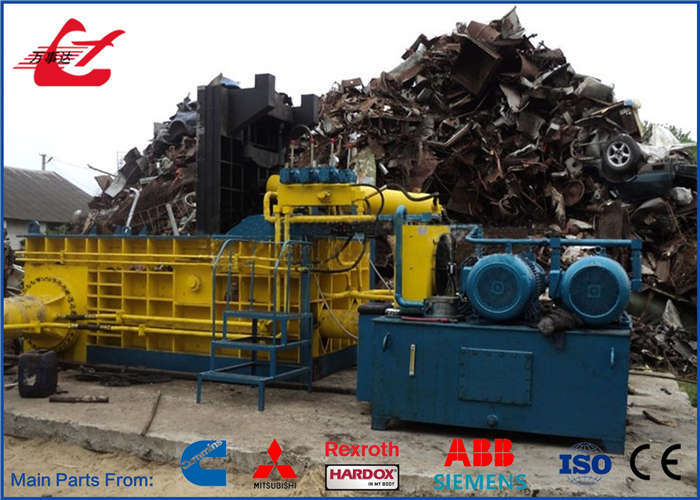
Jiangsu Wanshida maquinaria hidráulica Co., Ltd.suministrado1 juego de máquina cizalla de chatarra de contenedor horizontal Q43W-6300A, configurado conControl automático PLC + operación remota (Siemens),refrigeración por aire, y un emparejado3 motores + 3 bombasPaquete hidráulico para soportar un tiempo de funcionamiento diario estable.
7) Configuración del flujo de trabajo (cómo se ejecuta en el sitio)
La cizalla se colocó entre la preparación de entrada y la carga de salida para reducir los "toques por tonelada".
Alimentar → Mantener → Cortar → Descargar → Apilar/Cargar
8) Carga de contenedores/instalación/comentarios sobre la ejecución de prueba (notas en el sitio)
Se planificó el embalaje y descarga de contenedores para proteger los componentes hidráulicos y permitir una elevación y posicionamiento eficientes en el sitio.
Revisiones de instalación centradas en la nivelación, la conexión eléctrica, la limpieza hidráulica y la separación segura de los carriles de alimentación/descarga.
La validación de la ejecución de prueba enfatizó el mantenimiento de la estabilidad en piezas irregulares, la consistencia del ritmo de corte y la claridad de la puesta en escena de la descarga.
Incorporación de operadores centrada en la disciplina de alimentación de grúas y prácticas seguras de operación remota
El cliente informó que la máquina estaba funcionando sin problemas y que el rendimiento de uso general eramuy bien, especialmente para el dimensionamiento diario y la preparación de envíos
9) Tabla de especificaciones (parámetros técnicos clave)
Artículo
Especificación (Q43W-6300A)
Producto
Máquina cizalla de chatarra de contenedor horizontal Q43W-6300A
Cantidad
1 juego
Fuerza de corte
2890×2 kN (clase 630–640 toneladas), 2 cilindros de corte
Cilindro de aceleración
512 kN, 1 ud.
Cilindro de retención
1153 kN (118 toneladas), 1 ud.
Boca de alimentación (L×W)
3700 × 2500 milímetros
Boca de salida (An×Al)
1500 × 400 milímetros
Longitud de la hoja
1500 milímetros
Velocidad de corte
3–4 veces/minuto
Capacidad
8-10 t/h
Refrigeración del aceite hidráulico
Sistema de refrigeración por aire
Presión del sistema
22,0 MPa (máx. 25,5 MPa)
motores
Y225M-4, 45 kW, 1480 r/min, 3 juegos
Zapatillas
A7V160LV1RPFOO, 160 ml/r, 35 MPa, 3 juegos
Fuente de alimentación
380V / 50Hz (personalizado)
poder total
Alrededor de 139 kilovatios
Método de control
PLC automático + Remoto (Siemens)
Tamaño total (largo x ancho x alto)
8300 × 2250 × 2900 milímetros
peso total
Alrededor de 29 toneladas
Chatarra cortable típica
Cuadrado 120×120; Ángulo 200×200×20 (3 piezas); Redondo Ø130; Viga I 500×162×16; Placa 40×1000; Canal 400×104×14,5 (2 uds)
10) Notas sobre las condiciones de funcionamiento (parámetros + condiciones de trabajo)
Ideal para chatarra pesada mixta donde la sujeción estable reduce el reposicionamiento y mejora la consistencia del corte.
Capacidad nominal8-10 t/hDepende de la mezcla de desechos, la estabilidad de la alimentación y la disciplina de puesta en escena.
Elsistema de enfriamiento de aireSoporta el funcionamiento continuo cuando el patio mantiene un ritmo de alimentación constante.
Para obtener mejores resultados, diseñe zonas despejadas: carril de alimentación, zona de descarga y carril de apilamiento/carga para evitar la congestión.
11) Comentarios de los clientes (Primer cambio → Segundo cambio → Hábito final)
Primer cambio: la chatarra de gran tamaño dejó de bloquear los carriles porque el dimensionamiento pasó del procesamiento de “último minuto” al procesamiento de rutina.
Segundo cambio: las pilas de descarga se volvieron más uniformes, mejorando el apilamiento y reduciendo la fricción de carga.
Último hábito: la planificación del envío se volvió más tranquila: los tamaños de corte y el ritmo de producción eran predecibles y el envío diario se volvió más fácil de controlar.Los comentarios generales sobre el uso por parte del cliente fueronmuy positivo, especialmente en la estabilidad de la operación diaria y la mejora del flujo del patio.
12) Conclusión clave
Este proyecto de Brasil muestra cómo unCizalla para chatarra de contenedores de 630 toneladaspuede anclar una rutina predecible de “cortar y cargar”. Con una boca de alimentación amplia, sujeción fuerte, ritmo estable de 3 a 4 cortes/min y control remoto PLC, la Q43W-6300A ayuda a convertir chatarra pesada mixta en piezas consistentes y cargables, lo que permite una mejor organización del patio y un despacho más fluido.
Preguntas frecuentes (3)
P1: ¿Cómo sé si la clase de 630 toneladas es adecuada para mi jardín?Si su mezcla de chatarra incluye secciones y placas pesadas que regularmente crean cuellos de botella de gran tamaño, necesitará suficiente fuerza de corte para mantener el ritmo sin reposicionamiento frecuente.
P2: ¿Qué afecta más a la producción real?Método de alimentación (grúa/garra), mezcla de desechos y disposición de la puesta en escena. La espera estable y los carriles de descarga despejados reducen las interrupciones.
P3: ¿Qué se debe preparar antes de la instalación?Confirme el plan de elevación, el suministro de energía, la disponibilidad del aceite hidráulico y despeje las zonas de alimentación/descarga/apilamiento para un flujo de tráfico seguro.
Llamada a la acción:Envíe su mezcla de chatarra + tamaño/grosor máximo + toneladas diarias + método de alimentación + diseño del sitio. Recomendamos el tonelaje adecuado y una disposición práctica de la estación para un despacho estable.